



Discover why data-driven marketing is essential for modern businesses. Learn strategies, tools, benefits, and how data improves marketing performance.
In today’s highly competitive digital world, businesses can no longer rely on guesswork or assumptions to attract and retain customers. Instead, they depend on data-driven marketing to understand customer behavior, improve decision-making, and increase return on investment.
Data-driven marketing refers to the use of real customer data and analytics to guide marketing strategies. This includes insights from website traffic, social media interactions, purchase history, and customer engagement patterns. Companies that use data effectively are able to create more personalized experiences and achieve significantly better results.
Successful businesses prioritize marketing analytics because data reveals what works and what does not. Instead of wasting resources on ineffective campaigns, they invest in strategies backed by evidence.
This article explores why data-driven marketing has become the secret weapon of modern businesses and how organizations can use it to grow effectively.
What Is Data-Driven Marketing?
Data-driven marketing is a strategy that uses customer data and analytics to guide all marketing decisions.
Unlike traditional marketing, which often relies on intuition, data-driven marketing focuses on facts and measurable performance.
Key Differences
Traditional marketing:
- Based on assumptions
- Limited targeting
- General messaging
Data-driven marketing:
- Based on real-time data
- Precise targeting
- Personalized campaigns
Why Customer Data Matters
Customer data helps businesses understand:
- What customers want
- How they behave online
- What influences their buying decisions
Role of Analytics
Marketing analytics tools help businesses track performance, measure ROI, and optimize campaigns for better results.


The Evolution of Marketing: From Guesswork to Data
Marketing has evolved significantly over time.
Traditional Marketing
In the past, businesses relied on:
- TV advertisements
- Newspaper ads
- Billboards
- General market assumptions
Limitations
These methods lacked accurate measurement and targeting capabilities.
Digital Transformation
With the rise of the internet, businesses gained access to real-time data and customer insights.
Rise of Analytics Tools
Tools like Google Analytics and CRM platforms revolutionized how businesses track performance.
Why Data-Driven Marketing Is the Secret Weapon of Successful Businesses
Better Customer Understanding
Businesses use data to:
- Analyze customer behavior
- Segment audiences into groups
- Deliver personalized experiences
Improved Marketing ROI
Data helps companies:
- Reduce wasted ad spend
- Optimize budgets
- Track campaign performance accurately
Smarter Decision-Making
Data-driven decisions reduce risk and improve success rates through:
- Predictive analytics
- Evidence-based strategies
Enhanced Customer Experience
Customers receive:
- Personalized recommendations
- Relevant ads and messages
- Better overall engagement
Increased Competitive Advantage
Companies that use data can:
- Respond quickly to trends
- Analyze competitors
- Improve faster than competitors


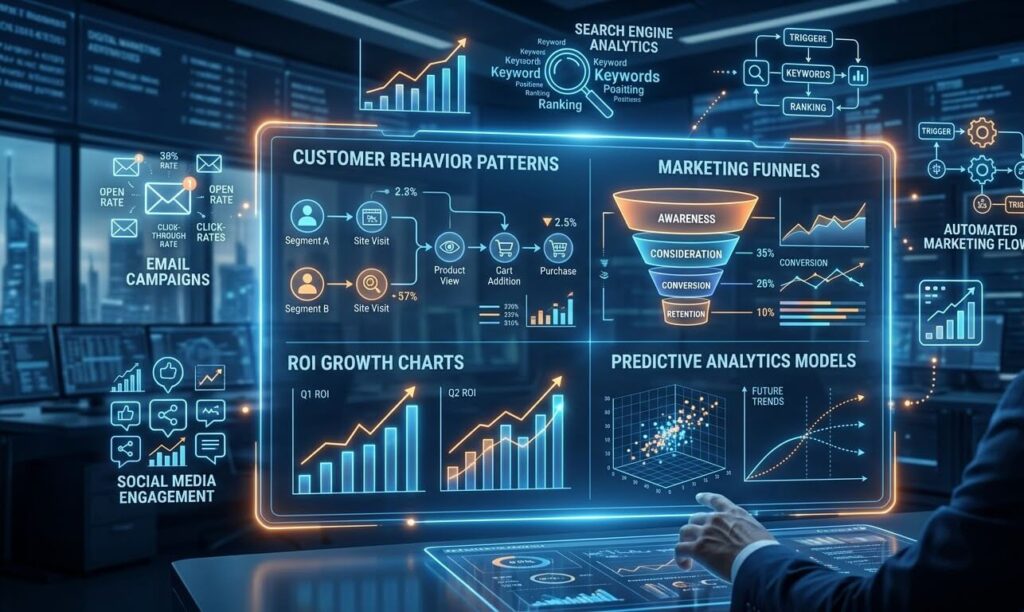
Key Components of Data-Driven Marketing
- Customer data collection systems
- Website analytics platforms
- CRM systems
- Marketing automation tools
- Social media analytics
- Email marketing analytics
- Conversion tracking systems
Types of Data Used in Marketing
- Demographic Data – age, gender, income
- Behavioral Data – browsing patterns, clicks
- Geographic Data – location-based insights
- Psychographic Data – interests and lifestyle
- Transactional Data – purchase history
How Businesses Use Data to Drive Growth
E-commerce Businesses
Use customer behavior data to recommend products.
SaaS Companies
Track user activity to improve retention.
Service-Based Businesses
Optimize customer acquisition strategies.
Content Websites
Improve SEO based on traffic data.
Online Stores
Use conversion tracking to increase sales.
Local Businesses
Target nearby customers using location data.
Benefits of Data-Driven Marketing
- Better targeting of customers
- Higher conversion rates
- Improved customer retention
- Increased profitability
- Efficient marketing campaigns
- Strong customer relationships
Disadvantages and Challenges
- Privacy concerns and data protection issues
- Poor data quality can lead to wrong decisions
- High cost of advanced tools
- Complexity of analytics systems
- Overload of unnecessary data
- Legal compliance requirements
Advantages and Disadvantages Summary
Advantages
- Accurate decision-making
- Improved ROI
- Better customer experience
- Increased efficiency
- Strong business growth
Disadvantages
- Requires expertise
- Privacy risks
- Cost of implementation
- Data management complexity
Best Tools for Data-Driven Marketing
- Google Analytics for website tracking
- CRM platforms for customer management
- Marketing automation tools for campaigns
- Social media analytics tools
- Business intelligence dashboards
How to Build a Data-Driven Marketing Strategy
Step 1: Define clear business goals
Step 2: Identify key performance metrics
Step 3: Collect high-quality customer data
Step 4: Analyze customer behavior patterns
Step 5: Create targeted campaigns
Step 6: Measure results accurately
Step 7: Continuously optimize performance
Future Trends in Data-Driven Marketing
- Artificial Intelligence integration
- Machine learning predictions
- Real-time personalization
- Customer data platforms
- Privacy-first marketing strategies
Real-World Examples of Success
Businesses using data-driven marketing often experience:
- Higher conversion rates
- Better customer engagement
- Increased revenue growth
- More efficient advertising campaigns
Frequently Asked Questions (FAQ)
What is data-driven marketing?
It is the use of data and analytics to guide marketing decisions.
Why is it important?
It improves accuracy, efficiency, and ROI.
Can small businesses use it?
Yes, even small businesses can use affordable tools.
What tools are used?
Google Analytics, CRM systems, and automation platforms.
What is marketing ROI?
It measures the return on marketing investment.
How is data collected?
Through websites, apps, surveys, and customer interactions.
What are the risks?
Privacy issues, data errors, and high costs.
Can AI improve it?
Yes, AI enhances prediction and automation.
Is it expensive?
It depends on tools and business size.
What is the future?
AI-powered, real-time personalized marketing.
Conclusion
Data-driven marketing has become essential for modern business success. It helps companies understand customers better, improve marketing performance, and make smarter decisions based on facts rather than assumptions.
Businesses that embrace data gain a strong competitive advantage and achieve higher growth rates. As technology continues to evolve, data will play an even more important role in shaping marketing strategies.
Companies that invest in data-driven approaches today are building a stronger and more profitable future.