


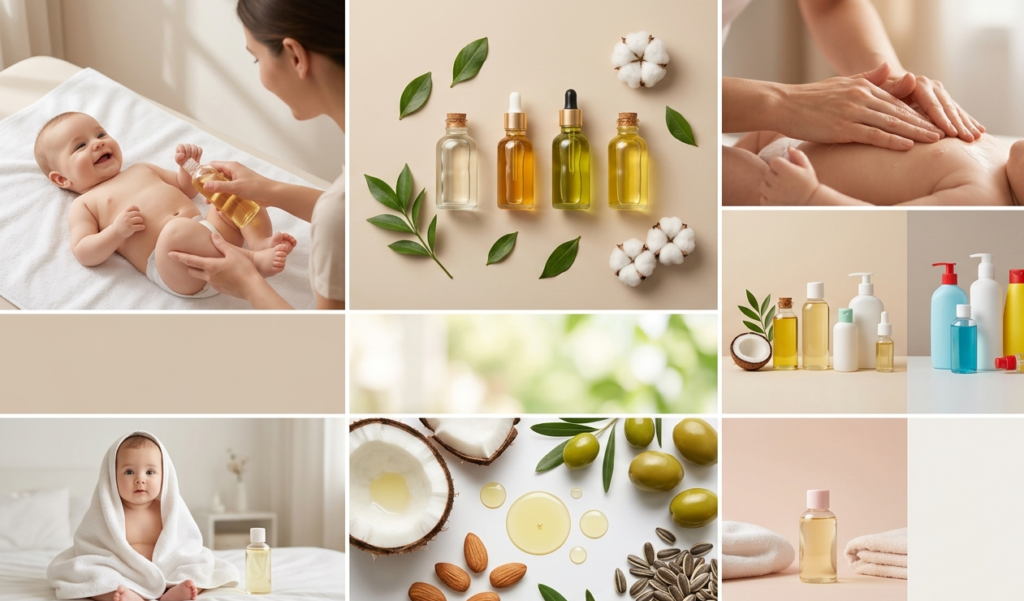
Discover the best baby oils for safe skin care, their benefits, risks, and how to choose gentle products for healthy baby skin.
IntroductionBaby skin is soft, delicate, and much more sensitive than adult skin. That is why choosing the right skin care products matters so much in a baby’s daily routine. A gentle skincare routine can help keep the skin moisturized, protected, and comfortable, especially in dry weather or after bathing. For many parents, natural oils are a popular choice because they can help nourish the skin without feeling heavy or harsh.When it comes to safe skin care for babies, choosing the best baby oils can make a real difference. The right oil may help reduce dryness, support the skin barrier, and keep the skin feeling smooth. However, not every oil is suitable for every baby. Some oils may irritate sensitive skin, while others may be too thick or may block pores on certain skin types.This article explains how baby skin care works, which oils are commonly used, the benefits and disadvantages of different options, and how parents can choose products safely. It is written for a global audience and uses practical advice that is easy to understand.What Is Baby Skin Care?Baby skin care means taking gentle steps to protect, clean, and moisturize a baby’s skin. Because babies have thinner and more delicate skin than adults, they can lose moisture faster and react more easily to harsh ingredients. That is why baby skin care should always be simple, mild, and safe.A good baby skincare routine usually includes gentle bathing, careful drying, and moisturizing when needed. In many cases, parents use oils or creams to help keep the skin soft and prevent dryness. Choosing the best baby oils can support healthy skin care when used correctly.Baby skin care is not only about appearance. It is also about comfort and protection. Healthy skin can help reduce dryness, flaking, irritation, and discomfort. It also supports the skin barrier, which helps protect the skin from outside irritants.Why Baby Skin Is So SensitiveBaby skin is still developing after birth. It is thinner than adult skin and can lose water more easily. This means it may dry out quickly, especially after bathing or in dry climates. Baby skin is also more likely to react to fragrances, dyes, strong soaps, and harsh chemicals.Another reason baby skin needs special care is that the skin barrier is not fully mature. The skin barrier helps hold in moisture and keep out irritants. Since this barrier is still developing in babies, it is important to use gentle and safe products.Because of this sensitivity, the best baby oils are usually those that are fragrance-free, gentle, and tested for sensitive skin. Parents should always watch for signs of irritation such as redness, rash, itching, or dryness after applying any product.Best Baby Oils for Safe Skin CareMany parents ask which oils are the safest for baby skin. The answer depends on the baby’s skin type, age, and any known allergies. Below are some of the most commonly used options.Coconut OilCoconut oil is one of the most popular natural oils for baby skin care. It is often used because it feels light, spreads easily, and may help moisturize dry skin. Some parents like it for massage after bathing.Benefits of coconut oil may include: It can help soften dry skin It is easy to apply It may feel soothing on the skinHowever, some babies may react to coconut oil, especially if they have very sensitive or acne-prone skin. It is best to do a patch test before using it widely.Almond OilAlmond oil is another common choice. It is rich in nutrients and is often used for baby massage. Many parents like it because it absorbs well and leaves the skin feeling smooth.Benefits of almond oil may include: It may help support soft, healthy skin It can be useful for massage It is usually light and easy to useOne important note is that almond oil should be avoided if the baby has a nut allergy or if allergies run in the family and a doctor has advised caution.Olive OilOlive oil is widely available and has been used for skin care for a long time. It may help with dryness and is often found in many homes. Some parents use it as a natural baby oil because it is easy to find and affordable.Benefits of olive oil may include: It may help moisturize dry areas It is inexpensive and accessible It can be used in small amountsStill, olive oil is not ideal for every baby. In some cases, it may disturb the skin barrier if used too often or on very sensitive skin. Use it carefully and observe how the baby’s skin responds.Sunflower Seed OilSunflower seed oil is often considered a gentle option for sensitive skin. It is light, mild, and may help protect the skin barrier. This makes it a good option for some babies.Benefits of sunflower seed oil may include: It is lightweight It may be gentle on sensitive skin It may help lock in moistureFor parents looking for the best baby oils, sunflower seed oil is worth considering, especially when fragrance-free and specially made for babies.Jojoba OilJojoba oil is known for being similar to the skin’s natural oils. It can be a good choice for moisturizing and is often well tolerated. Because it is lightweight, it may not feel greasy.Benefits of jojoba oil may include: It absorbs quickly It may help soften the skin It is often gentle for daily useAs with any oil, patch testing is important before regular use.How to Choose the Safest OilChoosing the safest baby oil is more important than choosing the most popular one. Here are some practical tips.Choose products that are fragrance-free or very lightly scented Look for oils made for babies or for sensitive skin Avoid products with long ingredient lists if possible Check for signs of allergy risk, especially with nut-based oils Do a patch test on a small area before full use Ask a pediatrician if the baby has eczema, allergies, or very sensitive skinThe best baby oils are usually simple, gentle, and made without unnecessary extras.Benefits of Using the Best Baby OilsUsing the best baby oils in the right way can offer several benefits.Moisturizing the SkinOne of the biggest benefits of baby oil is moisture retention. After bathing, a baby’s skin can dry out quickly. A gentle oil may help seal in moisture and keep the skin soft.Supporting Skin ProtectionA good oil may help strengthen the skin barrier by reducing moisture loss. This can be helpful in dry weather, windy conditions, or if the baby’s skin tends to become flaky.Providing Natural NourishmentMany natural oils contain fatty acids and vitamins that may support skin health. While baby skin does not need many products, a simple nourishing oil can sometimes help keep the skin comfortable and smooth.Potential Risks and DisadvantagesEven the best baby oils can have downsides if they are not chosen or used carefully.AllergiesSome babies may be sensitive to certain oils, especially oils from nuts or plants. Signs of an allergic reaction may include redness, swelling, rash, or itching.IrritationAn oil that is too strong, too scented, or not suitable for sensitive skin can irritate a baby’s skin. This is why it is important to use products made for babies and to test them first.Overuse IssuesUsing too much oil can leave the skin feeling greasy and may clog pores in some babies. In some cases, overuse may also trap heat or cause discomfort. A small amount is usually enough.Not Every Natural Oil Is SafeJust because an oil is natural does not mean it is automatically safe for babies. Some essential oils are too strong for infant skin and should be avoided unless a doctor recommends them.How to Safely Use Baby OilsUsing baby oils safely is simple when you follow a few careful steps.Step 1: Choose a Gentle ProductPick one of the best baby oils that is fragrance-free, baby-safe, and appropriate for sensitive skin. Check the label before buying.Step 2: Do a Patch TestApply a small amount of the oil to a small area of skin, such as the inner arm or leg. Wait 24 hours and watch for redness, rash, or irritation.Step 3: Use After BathingBaby oil is often best applied after bath time when the skin is clean and slightly damp. This may help lock in moisture.Step 4: Use a Small AmountYou do not need much. A few drops or a thin layer is often enough. Gently massage the oil into the skin.Step 5: Watch for ReactionsIf the baby develops a rash, itching, dryness, or discomfort, stop using the product and speak to a healthcare professional.Step 6: Use Only When NeededSome babies need oil every day, while others only need it sometimes. Use it based on the baby’s skin condition, not as an automatic routine.Tips for Choosing Safe Baby Skin Care ProductsParents should look carefully at labels and ingredients when selecting baby skin care items.Ingredients to AvoidIt is often best to avoid products with: Strong fragrance Artificial colors Alcohol Harsh chemicals Essential oils unless approved for baby use Many extra additives that are not neededLabels to CheckLook for labels such as: For babies For sensitive skin Dermatologist tested Fragrance-free Hypoallergenic, if appropriateThese labels do not guarantee perfect safety, but they can help narrow down safer choices.Organic vs Non-OrganicSome parents prefer organic oils because they feel more natural. Organic products may be a good option, but they are not always necessary or better for every baby. What matters most is whether the product is gentle, safe, and suitable for the baby’s skin.Advantages and Disadvantages of Baby OilsAdvantagesBaby oils may help moisturize the skin They can keep the skin soft and smooth They may support the skin barrier They are easy to use after bathing Some oils are natural and gentleDisadvantagesSome oils may cause allergies Certain products may irritate sensitive skin Overuse can make skin greasy Not all natural oils are baby-safe Some oils are not suitable for eczema-prone or allergy-prone babiesFrequently Asked Questions1. Are baby oils safe for newborns?Some baby oils can be safe for newborns if they are gentle, fragrance-free, and suitable for sensitive skin. Always check with a doctor if you are unsure.2. What is the best baby oil for dry skin?The best baby oils for dry skin are usually gentle, moisturizing, and fragrance-free. Coconut oil, sunflower seed oil, or specially made baby oils may work well for some babies, but results vary.3. Can I use adult oil on my baby?It is better not to use adult skin care products on babies unless a doctor says it is safe. Baby skin is more sensitive and may react differently.4. How often should I apply baby oil?There is no single rule for every baby. Many parents use baby oil after bathing or when the skin feels dry. Use only a small amount and watch for reactions.5. What should I do if my baby gets a rash after using oil?Stop using the product immediately and gently clean the skin. If the rash does not improve or seems serious, contact a healthcare professional.6. Is natural oil always better for babies?Not always. Natural oils can still cause irritation or allergies. The safest choice is a product that is gentle, tested, and suitable for baby skin.ConclusionSafe skin care for babies starts with simple, gentle choices. Baby skin is delicate, so it needs products that protect moisture without causing irritation. The best baby oils are usually fragrance-free, mild, and made for sensitive skin. Common choices like coconut oil, almond oil, olive oil, sunflower seed oil, and jojoba oil may be helpful, but every baby is different.Parents should always check ingredients, do a patch test, and stop using any product that causes redness or discomfort. It is also important to remember that natural does not always mean safe. A careful, simple approach is best.When chosen properly and used in small amounts, baby oil can be a helpful part of a healthy skincare routine. The goal is not to use many products, but to use the right ones with care. For parents looking for the best baby oils, the safest option is usually the one that is gentle, simple, and suited to the baby’s unique skin needs.