

Discover the most common marketing mistakes businesses make and learn practical strategies to improve marketing performance and business growth.
Marketing plays a critical role in the success of every business. Whether a company is a startup, a small business, or a large enterprise, effective marketing helps attract customers, build brand awareness, and increase revenue. However, many organizations make avoidable marketing mistakes that limit growth and waste valuable resources.
Understanding these common errors can help businesses create more effective campaigns, improve customer engagement, and achieve long-term success. This guide explores the most common marketing mistakes businesses should avoid and provides practical strategies to improve results.
What Is Marketing and Why Is It Important?
Marketing refers to the activities businesses use to promote products or services, communicate value, and build relationships with customers. It includes market research, branding, advertising, content creation, social media, SEO, email campaigns, and customer engagement.
Effective marketing helps businesses:
- Increase brand awareness
- Generate qualified leads
- Build customer trust
- Improve sales performance
- Strengthen customer loyalty
- Gain a competitive advantage
Without proper marketing, even excellent products may struggle to reach the right audience.
Why Businesses Make Marketing Mistakes
Many marketing mistakes occur because businesses:
- Lack experience or expertise
- Fail to understand customer needs
- Follow trends without a strategy
- Ignore performance data
- Operate with limited budgets
- Focus only on short-term results
These challenges can lead to poor decision-making and ineffective campaigns.
The Cost of Poor Marketing Decisions
Poor marketing decisions can have serious consequences, including:
- Lost sales opportunities
- Reduced customer trust
- Lower return on investment (ROI)
- Weak brand reputation
- Inefficient use of resources
- Difficulty competing in the market
Even small mistakes can accumulate over time and significantly impact business growth.
Common Marketing Mistakes Businesses Should Avoid

Not Understanding the Target Audience
Marketing Without Customer Knowledge
One of the biggest marketing mistakes is failing to understand the target audience.
Businesses should know:
- Customer demographics
- Buying behavior
- Pain points
- Preferences
- Goals
For example, marketing luxury products to price-sensitive customers often leads to poor results.
Ignoring Market Research
Why Research Matters in Marketing
Market research provides valuable insights about customers, competitors, and industry trends.
Without research, businesses often:
- Launch ineffective campaigns
- Target the wrong audience
- Misprice products
- Miss market opportunities
Regular research supports smarter marketing decisions.
Lack of a Clear Marketing Strategy
Strategic Planning Is Essential
Many businesses start marketing activities without a documented plan.
A strong marketing strategy should define:
- Objectives
- Target audience
- Marketing channels
- Budget
- Performance metrics
Without a clear strategy, campaigns often become inconsistent and ineffective.
Focusing on Sales Instead of Customer Value
Building Relationships Through Marketing
Customers respond better when businesses focus on solving problems rather than pushing sales.
Successful marketing emphasizes:
- Education
- Solutions
- Trust-building
- Customer experience
Value-driven marketing often produces better long-term results than aggressive selling.
Inconsistent Brand Messaging
The Importance of Brand Consistency
Brand consistency helps customers recognize and trust a business.
Inconsistent messaging can create confusion about:
- Brand values
- Product benefits
- Company identity
Businesses should maintain consistent communication across all marketing channels.
Neglecting SEO
Search Engine Optimization and Marketing Success
SEO is one of the most valuable long-term marketing investments.
Businesses that ignore SEO often:
- Miss organic traffic opportunities
- Depend heavily on paid advertising
- Lose visibility in search results
SEO improves online visibility and attracts qualified visitors.
Ignoring Content Marketing
Content as a Marketing Asset
Content marketing helps businesses educate, inform, and engage potential customers.
Examples include:
- Blog posts
- Videos
- Guides
- Case studies
- Infographics
High-quality content supports SEO, builds authority, and generates leads.
Poor Social Media Marketing Practices
Common Social Media Mistakes
Many businesses make mistakes such as:
- Posting inconsistently
- Ignoring audience engagement
- Using the wrong platforms
- Publishing low-quality content
Effective social media marketing requires consistency, strategy, and audience interaction.
Not Tracking Marketing Performance
Data-Driven Marketing Decisions
Businesses should regularly monitor key performance indicators (KPIs), including:
- Website traffic
- Conversion rates
- Lead generation
- Engagement metrics
- Customer acquisition costs
Without tracking, it becomes difficult to identify successful campaigns.
Ignoring Customer Feedback
Customers Provide Valuable Marketing Insights
Customer feedback reveals:
- Product strengths
- Service weaknesses
- Customer expectations
- Improvement opportunities
Businesses that listen to customers often improve marketing effectiveness and customer satisfaction.
Overlooking Mobile Users
Mobile-Friendly Marketing Is Essential
A large percentage of internet traffic comes from mobile devices.
Businesses should ensure:
- Mobile-responsive websites
- Fast loading speeds
- Mobile-friendly content
- Easy navigation
Poor mobile experiences can lead to lost customers.
Failing to Adapt to Marketing Trends
Staying Competitive
Marketing continuously evolves.
Businesses that resist change may struggle with:
- New technologies
- Consumer behavior shifts
- Platform updates
Successful organizations adapt while maintaining their core strategy.
Depending on One Marketing Channel
Diversification Reduces Risk
Relying on a single marketing channel creates vulnerability.
For example, depending only on social media can be risky if platform algorithms change.
Businesses should diversify across:
- SEO
- Email marketing
- Social media
- Content marketing
- Paid advertising
Poor Budget Management
Spending Marketing Funds Wisely
Poor budgeting often results in:
- Overspending
- Underfunding successful campaigns
- Inefficient resource allocation
Businesses should regularly evaluate spending and ROI.
Lack of Marketing Automation
Improving Efficiency
Marketing automation tools help businesses:
- Nurture leads
- Schedule content
- Personalize communication
- Track customer journeys
Without automation, marketing processes may become inefficient and difficult to scale.
How These Marketing Mistakes Affect Business Growth
Marketing mistakes can negatively impact growth by:
- Reducing customer acquisition
- Lowering conversion rates
- Damaging brand credibility
- Increasing operational costs
- Limiting market reach
Over time, these issues can significantly reduce profitability and competitiveness.
Benefits of Avoiding Marketing Mistakes
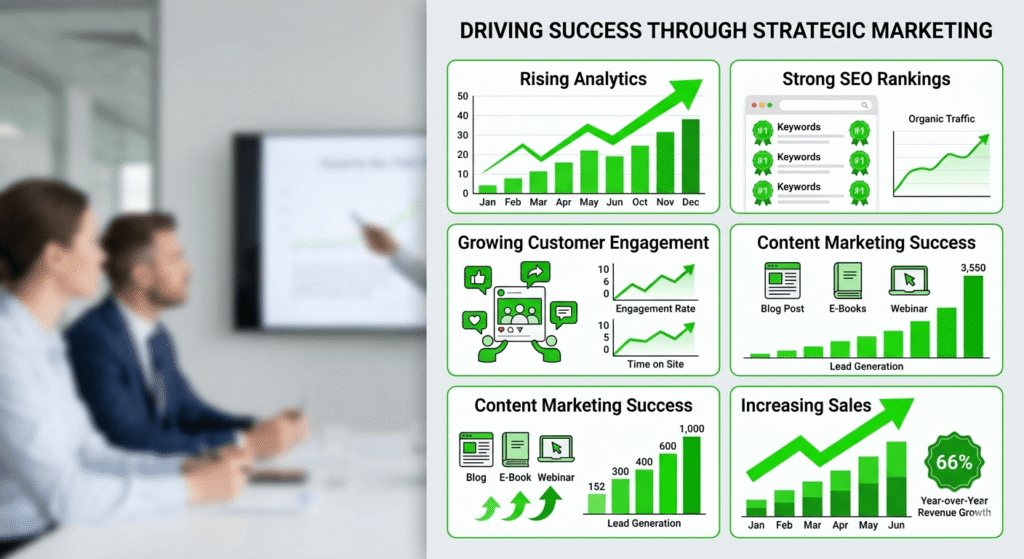
Businesses that avoid common marketing errors often experience:
- Better ROI
- Increased customer trust
- Higher conversion rates
- Improved brand reputation
- Stronger customer relationships
- Sustainable business growth
These benefits contribute to long-term success and stability.
Disadvantages of Poor Marketing Practices
Poor marketing practices can result in:
- Lost revenue
- Customer dissatisfaction
- Weak online presence
- Poor lead quality
- Reduced competitiveness
- Wasted resources
Addressing these issues early can prevent long-term damage.
How to Build a Successful Marketing Strategy
A successful marketing strategy should include:
Define Clear Goals
Set measurable objectives such as increasing traffic, generating leads, or improving sales.
Understand Your Audience
Develop customer personas based on research and data.
Choose Appropriate Channels
Select marketing channels that align with customer behavior.
Create Valuable Content
Focus on solving customer problems and answering questions.
Monitor Performance
Regularly review analytics and optimize campaigns.
Continuously Improve
Use testing and feedback to refine strategies.
Best Marketing Practices for Modern Businesses
Modern businesses should:
- Prioritize customer experience
- Invest in SEO
- Produce high-quality content
- Use data-driven decision-making
- Personalize communication
- Build strong brand identity
- Optimize for mobile users
- Maintain consistency across channels
These practices help businesses remain competitive in changing markets.
Marketing Tools That Help Avoid Common Mistakes
Several tools can improve marketing performance:
Analytics Tools
- Google Analytics
- Google Search Console
SEO Tools
- Ahrefs
- SEMrush
- Rank Math
Email Marketing Tools
- Mailchimp
- ConvertKit
Social Media Tools
- Buffer
- Hootsuite
Marketing Automation Tools
- HubSpot
- ActiveCampaign
These tools help businesses make informed decisions and improve efficiency.
Future Trends in Marketing
The future of marketing is expected to focus on:
- Artificial intelligence (AI)
- Marketing automation
- Personalized experiences
- Voice search optimization
- Video content growth
- Data privacy and transparency
- Interactive content
- Predictive analytics
Businesses that embrace these trends may gain a significant competitive advantage.
Expert Tips for Better Marketing Results
Marketing professionals recommend:
- Focus on customer needs first.
- Build long-term relationships.
- Invest in content quality.
- Measure performance consistently.
- Test campaigns regularly.
- Diversify marketing channels.
- Stay updated on industry trends.
- Prioritize mobile optimization.
- Use automation strategically.
- Continuously learn and adapt.
Frequently Asked Questions (FAQ)
What are the most common marketing mistakes?
Common marketing mistakes include poor audience targeting, ignoring SEO, inconsistent branding, weak content strategies, and failure to track performance.
Why do businesses fail in marketing?
Businesses often fail in marketing because they lack a clear strategy, ignore customer needs, and make decisions without data.
How can a company improve its marketing strategy?
Companies can improve marketing by conducting research, defining goals, tracking performance, and creating customer-focused campaigns.
What role does SEO play in marketing?
SEO helps businesses improve search visibility, attract organic traffic, and generate qualified leads.
Why is customer research important?
Customer research helps businesses understand audience needs, preferences, and buying behavior.
How can businesses measure marketing success?
Marketing success can be measured through KPIs such as traffic, conversions, lead generation, customer retention, and ROI.
What are the risks of poor marketing?
Poor marketing can lead to lost sales, wasted budgets, weak brand reputation, and reduced customer trust.
How does content marketing help businesses?
Content marketing educates customers, improves SEO, builds authority, and supports lead generation.
What marketing channels are most effective?
Effective channels include SEO, content marketing, email marketing, social media, and paid advertising.
How can small businesses avoid marketing mistakes?
Small businesses should develop a clear strategy, understand their audience, monitor results, and continuously optimize campaigns.
Conclusion
Marketing is one of the most important drivers of business success, but common mistakes can significantly reduce results. Businesses that understand their audience, invest in SEO, create valuable content, monitor performance, and adapt to changing trends are more likely to achieve sustainable growth.
By avoiding these common marketing mistakes and following proven best practices, companies can strengthen customer relationships, improve brand visibility, and maximize their marketing investment for long-term success.