
Discover when email marketing truly works. Learn key conditions, strategies, benefits, and mistakes to avoid for better results.URL Slug: email-marketing-works-conditions
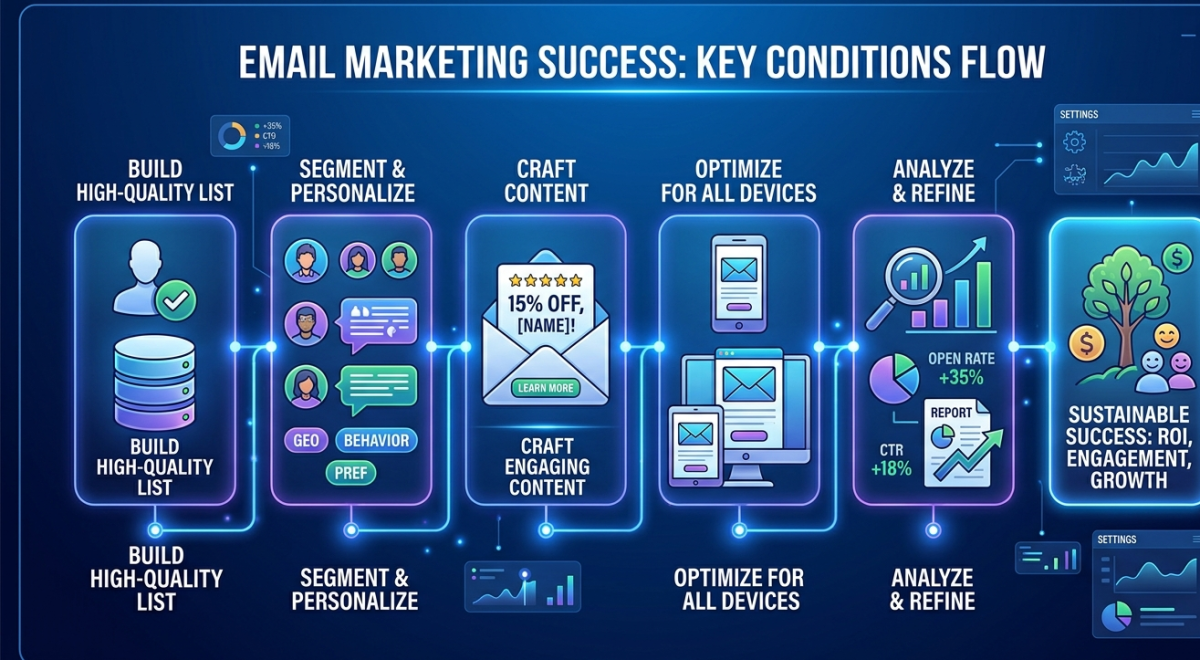
Email marketing remains one of the most powerful tools in digital marketing. Yet, many businesses struggle to get results from it. The truth is simple: email marketing works only under specific conditions. Without the right strategy, audience, and execution, even the best campaigns can fail.In today’s competitive online world, sending emails is not enough. You need to understand what makes email marketing effective and how to apply those principles consistently. This article explains everything you need to know, from fundamentals to advanced strategies, so you can make email marketing work for you.What is Email Marketing?Email marketing is a digital marketing strategy that involves sending emails to a group of people to promote products, share information, or build relationships.Why Businesses Use Email MarketingBusinesses use email marketing because it offers:Direct communication with customersHigh return on investment (ROI)Personalization opportunitiesMeasurable performance metricsAutomation capabilitiesUnlike social media, where algorithms control visibility, email marketing gives you direct access to your audience’s inbox. This makes it a reliable and long-term marketing channel.Why Email Marketing Fails for Many PeopleMany beginners assume email marketing is easy. They collect emails, send messages, and expect results. When results don’t come, they think the method doesn’t work. In reality, the problem is usually execution.Common MistakesBuying email lists instead of building themSending irrelevant or boring contentIgnoring audience preferencesWriting weak subject linesNot optimizing for mobile devicesMisunderstandingsSome people believe:More emails mean more salesEvery subscriber is equally interestedEmail marketing works instantlyThese assumptions lead to poor results. Email marketing is not about quantity—it’s about quality and strategy.Conditions Under Which Email Marketing WorksThis is the most important section. Email marketing only succeeds when these key conditions are met.1. Building a Quality Email ListA strong email list is the foundation of successful email marketing.Instead of buying lists, focus on:Organic sign-upsLead magnets (free guides, offers, discounts)Website subscription formsA quality list includes people who are genuinely interested in your content or products.2. Permission-Based MarketingAlways get permission before sending emails. This builds trust and ensures compliance with global regulations.Best practices include:Double opt-in subscriptionsClear consent formsEasy unsubscribe optionsWhen users choose to receive your emails, engagement improves significantly.3. Personalization and SegmentationNot all subscribers are the same. Segment your audience based on:InterestsLocationBehaviorPurchase historyThen personalize emails using:NamesRelevant offersTailored contentPersonalization makes emails feel more human and increases open and click rates.4. Valuable ContentPeople open emails because they expect value.Provide:Useful informationExclusive offersEducational contentProblem-solving tipsAvoid sending emails that only focus on selling. Balance value and promotion.5. Consistency and TimingConsistency builds trust. If you send emails randomly, subscribers may forget you or lose interest.Follow a schedule such as:Weekly newslettersMonthly updatesTimely promotional campaignsAlso, test different sending times to find what works best for your audience.6. Mobile OptimizationMost people read emails on their phones. If your email is not mobile-friendly, users will ignore it.Ensure:Responsive designShort paragraphsClear formattingEasy-to-click buttons7. Strong Subject LinesThe subject line determines whether your email gets opened.Effective subject lines are:Short and clearCuriosity-drivenRelevant to the readerExample:Instead of “Our Latest Products,” try “You’ll Love These New Arrivals”8. Clear Call-to-Action (CTA)Every email should have a purpose.Your CTA should:Be clear and visibleUse action wordsGuide the readerExamples include:Shop NowLearn MoreGet StartedWithout a strong CTA, even a great email can fail.Advantages of Email MarketingHigh ROIEmail marketing delivers one of the highest returns among digital channels. With minimal cost, businesses can reach a large audience.Direct CommunicationYou speak directly to your audience without relying on third-party platforms.Automation BenefitsAutomated emails save time and increase efficiency. Examples include:Welcome emailsAbandoned cart remindersFollow-up sequencesCost-EffectivenessCompared to paid ads, email marketing is affordable and scalable for all business sizes.Disadvantages of Email MarketingSpam IssuesEmails may end up in spam folders if not properly optimized or if sent without permission.Low Open RatesNot all subscribers open emails. This requires continuous improvement in subject lines and content.Requires Strategy and PatienceEmail marketing is not a quick success tool. It takes time to build trust and see results.Best Practices for Successful Email MarketingTo make email marketing work effectively, follow these practical tips:Focus on quality over quantityTest different subject lines (A/B testing)Analyze performance metrics regularlyKeep emails simple and easy to readUse storytelling to engage readersMaintain a consistent brand voiceReal-World ExampleAn online clothing store increased sales by:Segmenting customers based on past purchasesSending personalized recommendationsOffering limited-time discountsAs a result, their email open rates and conversions improved significantly.Common Mistakes to AvoidOver-EmailingSending too many emails can annoy subscribers and lead to unsubscribes.Ignoring AnalyticsMetrics like open rates, click rates, and conversions provide valuable insights. Ignoring them means missing opportunities for improvement.Poor DesignCluttered emails with too much text or bad formatting reduce readability.Frequently Asked Questions (FAQ)1. Is email marketing still effective in 2026?Yes, email marketing remains highly effective when done correctly. It continues to deliver strong ROI and direct engagement.2. How often should I send emails?It depends on your audience. Most businesses find success with 1–4 emails per month.3. What is a good open rate?A good open rate typically ranges between 20% and 30%, depending on your industry.4. Can I use email marketing for a small business?Absolutely. Email marketing is one of the best tools for small businesses due to its low cost and high impact.5. How do I grow my email list?You can grow your list by:Offering free resourcesAdding sign up forms to your Website promoting subscriptions on social Conclusion marketing is powerful, but it is not automatic. It works only when the right conditions are met. From building a quality email list to creating valuable content and using strong calls-to-action, every step matters.Success in email marketing depends on strategy, consistency, and understanding your audience. When done correctly, it can become one of the most reliable and profitable marketing channels for your business.If you focus on the right conditions and avoid common mistakes, email marketing will not just work—it will thrive.