


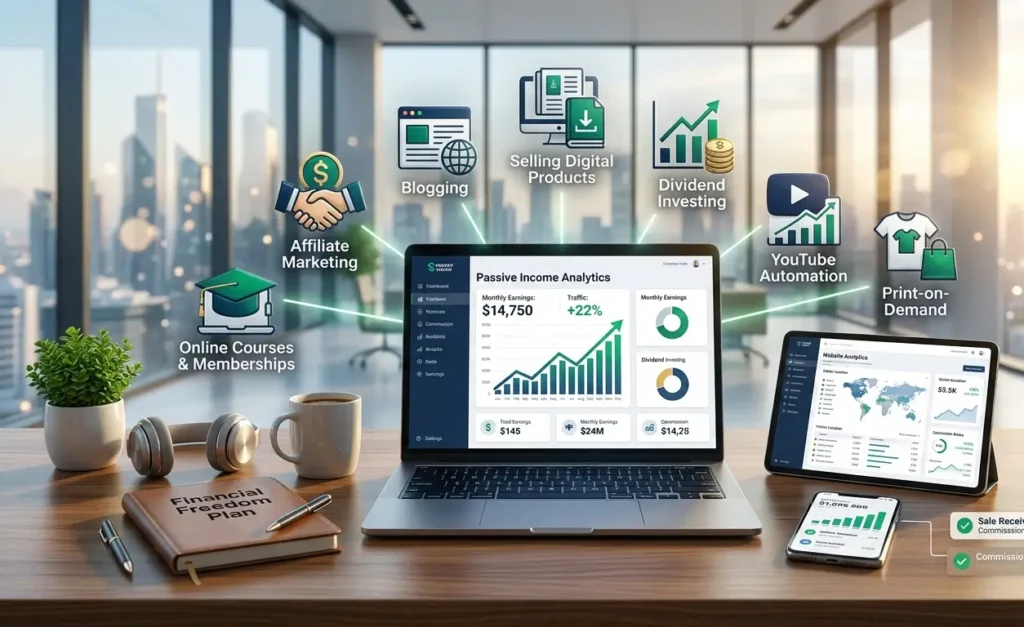
Discover seven proven passive income ideas that work in today’s digital world. Learn how to build sustainable online income with practical strategies for beginners.
Building wealth no longer depends only on working longer hours. Thanks to technology, the internet, and digital platforms, millions of people are creating additional income streams from anywhere in the world. This is why passive income ideas have become one of the most searched financial topics today.
Passive income allows you to earn money from work you complete once but continue benefiting from over time. Although most passive income strategies require planning, learning, and consistent effort at the beginning, they can eventually generate income with much less daily involvement than traditional jobs.
Whether you are a student looking for extra income, a freelancer wanting more financial security, an entrepreneur expanding your business, or someone planning for long-term financial freedom, the right passive income strategy can help you reach your goals.
In this guide, you’ll discover seven realistic passive income ideas that continue to perform well in today’s digital economy. You’ll also learn who each method is best suited for, the skills required, startup costs, potential earnings, common mistakes, and practical tips for long-term success.
Affiliate Marketing
What Is Affiliate Marketing?
Affiliate marketing is a business model where you promote products or services offered by other companies. When someone purchases through your unique referral link, you earn a commission.
This is one of the most popular 7 Passive Income Ideas That Actually Work in the Digital Agebecause you don’t need to create your own products or manage inventory.
How It Works
After joining an affiliate program, you receive a unique tracking link. You can place this link on your website, blog posts, YouTube videos, newsletters, or social media content. Every qualifying sale earns you a commission.
Why It Works Today
Online shopping continues to grow worldwide. Businesses rely on affiliates to introduce products to new customers, making affiliate marketing an attractive opportunity for content creators.
Best For
- Bloggers
- Website owners
- YouTubers
- Email marketers
- Digital creators
Startup Costs
Very low. A domain name, web hosting, and quality content are usually enough to get started.
Skills Required
- SEO
- Content writing
- Keyword research
- Basic digital marketing
- Audience building
Income Potential
Affiliate income ranges from a few dollars each month to thousands of dollars, depending on website traffic, niche, and content quality.
Advantages
- Low startup cost
- No customer support
- No product creation
- Flexible working hours
- Scalable income
Disadvantages
- Takes time to build traffic
- Income depends on audience trust
- Commission rates may change
Common Mistakes
- Promoting too many products
- Ignoring SEO
- Writing low-quality content
- Choosing products unrelated to the audience
Practical Tips
Focus on solving readers’ problems instead of simply selling products. Publish detailed guides, honest reviews, and helpful comparisons.
Example
A technology blog reviews productivity software. Every visitor who purchases through the affiliate link generates a commission while the article continues attracting search traffic for years.
Blogging
What Is Blogging?
Blogging involves publishing valuable content around a specific niche. Over time, quality articles attract visitors from search engines and create multiple income opportunities.
Many successful bloggers combine display advertising, affiliate marketing, sponsored posts, and digital products.
Why Blogging Still Works
Despite social media growth, people continue searching Google for reliable answers. Helpful articles remain valuable long after publication.
Best For
- Writers
- Experts
- Teachers
- Professionals
- Hobby enthusiasts
Startup Costs
Generally under $100 for a domain name and hosting.
Skills Required
- Writing
- SEO
- Content planning
- Research
- Basic website management
Income Potential
Blogging income varies widely. Consistent publishers with strong SEO can generate steady monthly revenue over time.
Advantages
- Multiple income streams
- Full ownership
- Long-term traffic
- Builds personal authority
Disadvantages
- Slow initial growth
- Requires consistency
- Competitive niches
Common Mistakes
- Publishing without keyword research
- Giving up too early
- Copying competitors
- Ignoring user experience
Practical Tips
Focus on publishing evergreen, high-quality articles that answer real questions. Update older content regularly to maintain rankings.
Example
A personal finance blog publishes detailed budgeting guides. As search traffic grows, the site earns revenue through ads, affiliate partnerships, and digital products.
Selling Digital Products
What Are Digital Products?
Digital products are downloadable items customers purchase online. Unlike physical products, they require no shipping and can be sold repeatedly.
Examples include:
- eBooks
- Printable planners
- Templates
- Stock photos
- Graphic designs
- Online tools
- Software
- Checklists
Why They Work
Once created, digital products can generate income repeatedly without manufacturing or inventory costs.
Best For
- Designers
- Writers
- Photographers
- Developers
- Educators
- Freelancers
Startup Costs
Usually low, depending on the software used to create the product.
Skills Required
- Product creation
- Design
- Marketing
- Customer research
- Sales copywriting
Income Potential
A successful digital product can continue generating revenue for months or even years with regular promotion.
Advantages
- High profit margins
- Unlimited sales
- No inventory
- Global customer base
- Easy automation
Disadvantages
- Initial creation takes time
- Competition can be strong
- Requires effective marketing
Common Mistakes
- Creating products without market research
- Poor product quality
- Weak sales pages
- Ignoring customer feedback
Practical Tips
Solve one specific problem exceptionally well. Customers buy solutions rather than products.
Example
A graphic designer creates Canva templates for small businesses. Each template is created once but sold hundreds of times through an online marketplace, generating recurring income with minimal ongoing effort.


Dividend Investing
What Is Dividend Investing?
Dividend investing involves purchasing shares of established companies that distribute a portion of their profits to shareholders as dividends. Instead of relying only on stock price growth, investors receive regular payments, making this one of the most reliable passive income ideas for long-term wealth building.
How It Works
You invest in dividend-paying stocks or exchange-traded funds (ETFs). As long as the company continues paying dividends and you own the shares before the dividend record date, you’ll receive payments on a scheduled basis, often quarterly.
Why It Works in Today’s Digital Economy
Modern investment platforms have made investing more accessible than ever. Many online brokers allow investors to start with small amounts of money and manage their portfolios from a smartphone or computer.
Best For
- Long-term investors
- Professionals
- Retirement planners
- Individuals seeking steady passive income
Startup Costs
Startup costs vary. You can begin with a relatively small investment and gradually increase your portfolio over time.
Skills Required
- Basic financial knowledge
- Investment research
- Risk management
- Patience
Income Potential
Dividend income depends on the size of your investment portfolio, dividend yields, and company performance. Larger portfolios generally generate higher recurring income.
Advantages
- Potential for regular income
- Opportunity for long-term capital growth
- Dividend reinvestment can accelerate wealth building
- Lower maintenance compared to many businesses
Disadvantages
- Investment values can fluctuate
- Dividend payments are not guaranteed
- Building significant income takes time
Common Mistakes to Avoid
- Chasing unusually high dividend yields
- Ignoring company fundamentals
- Failing to diversify investments
- Investing without understanding market risks
Practical Tips for Success
Focus on financially strong companies with a consistent history of paying dividends. Diversify across different industries to reduce risk.
Real-World Example
An investor gradually builds a diversified portfolio over several years. By reinvesting dividends and adding monthly contributions, their passive income steadily increases without requiring additional daily work.
YouTube Automation
What Is YouTube Automation?
YouTube automation is a business model where content is produced using a team or outsourced services instead of relying on a single creator appearing on camera. Videos generate income through advertising, affiliate marketing, sponsorships, and digital product sales.
How It Works
A channel owner researches topics, writes scripts, hires voice-over artists, editors, and designers, then publishes optimized videos consistently.
Why It Works Today
Video consumption continues to grow worldwide. Educational, finance, technology, lifestyle, and entertainment content attract millions of viewers every day.
Best For
- Entrepreneurs
- Content creators
- Digital marketers
- Business owners
Startup Costs
Moderate. Expenses may include editing software, freelancers, graphic design, and voice-over services.
Skills Required
- Keyword research
- Video SEO
- Content planning
- Project management
- Audience analysis
Income Potential
Successful YouTube channels often earn from multiple income streams, making them highly scalable over time.
Advantages
- Multiple monetization opportunities
- Global audience reach
- Evergreen videos can generate income for years
- Highly scalable
Disadvantages
- Requires consistency
- Competition is increasing
- Results are rarely immediate
Common Mistakes
- Uploading inconsistent content
- Ignoring audience retention
- Poor thumbnails and titles
- Copying competitors
Practical Tips for Success
Focus on solving viewers’ problems with valuable, original content. Optimize titles, descriptions, and thumbnails while maintaining a consistent publishing schedule.
Realistic Example
A finance-focused YouTube channel publishes weekly educational videos about saving money and investing. As the video library grows, older videos continue generating views and revenue alongside new uploads.
Print-on-Demand Business
What Is Print-on-Demand?
Print-on-demand is an e-commerce business model where custom-designed products are printed only after customers place orders. Products commonly include T-shirts, hoodies, mugs, phone cases, tote bags, and notebooks.
How It Works
Designs are uploaded to a print-on-demand platform connected to an online store. When someone purchases a product, the supplier prints, packages, and ships it directly to the customer.
Why It Works Today
Consumers increasingly seek personalized products. Print-on-demand allows entrepreneurs to test ideas without purchasing inventory in advance.
Best For
- Graphic designers
- Artists
- Creative entrepreneurs
- Brand builders
Startup Costs
Low compared to traditional retail because inventory is unnecessary.
Skills Required
- Graphic design
- Branding
- Marketing
- Product research
- Customer understanding
Income Potential
Income depends on product quality, niche selection, marketing effectiveness, and customer demand.
Advantages
- No inventory
- Low startup risk
- Worldwide selling opportunities
- Easy product expansion
Disadvantages
- Lower profit margins
- Dependence on suppliers
- High competition
Common Mistakes
- Choosing overly competitive niches
- Low-quality designs
- Weak branding
- Ignoring customer feedback
Practical Tips for Success
Target specific audiences rather than everyone. Unique designs combined with strong branding often outperform generic products.
Realistic Example
A designer creates motivational fitness apparel targeting gym enthusiasts. As the brand gains recognition through social media and SEO, sales continue growing with minimal operational work.
Online Courses and Memberships
What Are Online Courses and Memberships?
Online courses teach valuable skills through video lessons, downloadable resources, quizzes, and assignments. Membership websites provide ongoing access to exclusive educational content in exchange for recurring subscription fees.
How They Work
Creators build educational content once and continue selling access to new students or subscribers over time.
Why They Work in Today’s Digital Economy
Online learning has become increasingly popular because people value flexible education they can access from anywhere.
Best For
- Teachers
- Coaches
- Consultants
- Industry experts
- Professionals
Startup Costs
Moderate. Costs may include recording equipment, course platforms, editing software, and website hosting.
Skills Required
- Teaching
- Communication
- Content organization
- Video creation
- Marketing
Income Potential
High-quality courses can generate recurring income for years when regularly updated and promoted.
Advantages
- High profit margins
- Scalable business model
- Builds personal authority
- Recurring subscription income
Disadvantages
- Time-consuming creation process
- Requires expertise
- Ongoing updates improve competitiveness
Common Mistakes
- Teaching topics without sufficient research
- Poor audio or video quality
- Overpricing beginner courses
- Failing to collect student feedback
Practical Tips for Success
Create practical lessons that help students achieve measurable results. Include worksheets, templates, and real-world examples to increase value.
Realistic Example
A digital marketing consultant creates an SEO course for beginners. Thousands of students enroll over several years, providing ongoing passive income while the course receives periodic updates.
Why Passive Income Is Different from Active Income
Active income requires continuous work in exchange for payment. Examples include salaries, hourly wages, and freelance projects. When you stop working, your income usually stops as well.
Passive income, on the other hand, is built by creating assets that continue generating revenue over time. While most passive income sources require significant upfront effort, they have the potential to provide earnings long after the initial work is completed.
Many financially successful individuals combine both active and passive income to improve financial stability and create long-term wealth.
How to Choose the Best Passive Income Idea
Choosing the right strategy depends on your goals, available time, skills, and budget.
Ask yourself:
- What skills do I already have?
- How much money can I invest?
- How much time can I dedicate each week?
- Do I enjoy creating content, teaching, investing, or selling products?
- Am I looking for short-term income or long-term financial growth?
Start with one business model, master it, and expand only after building a stable foundation.
Essential Tools and Resources
The right tools can improve productivity and support long-term growth.
Useful categories include:
- Keyword research tools
- SEO optimization tools
- Website analytics platforms
- Email marketing software
- Graphic design applications
- Project management tools
- Content planning calendars
- Cloud storage services
- AI writing and brainstorming assistants
- Website security and backup solutions
Choose tools that match your business needs rather than subscribing to every available service.
Common Myths About Passive Income
Myth 1: Passive income requires no work.
Reality: Every successful passive income stream requires planning, consistent effort, and ongoing improvement.
Myth 2: You need a large amount of money.
Reality: Many online businesses can begin with a modest budget and grow over time.
Myth 3: Success happens overnight.
Reality: Sustainable passive income is usually built through consistent learning, publishing, testing, and optimization.
Myth 4: Passive income is risk-free.
Reality: Every investment or business carries some level of risk. Research and careful planning reduce potential losses.
Beginner Action Plan
- Choose one passive income idea.
- Learn the required skills.
- Set realistic monthly goals.
- Build a professional website or online platform.
- Publish valuable content consistently.
- Monitor performance using analytics.
- Improve based on data and customer feedback.
- Reinvest a portion of your earnings to accelerate growth.
Future Trends of Passive Income in the AI Era
Artificial intelligence is transforming how online businesses operate. AI-powered tools help entrepreneurs research keywords, create content ideas, automate repetitive tasks, improve customer support, and analyze data more efficiently.
However, long-term success will continue to depend on originality, trust, expertise, and delivering genuine value. Businesses that combine human creativity with responsible AI assistance are likely to remain competitive as technology evolves.
Pros and Cons of Passive Income Ideas
Advantages
- Greater financial freedom
- Multiple income streams
- Flexible working schedule
- Global business opportunities
- Potential for long-term wealth
- Better income diversification
- Increased financial security
Disadvantages
- Requires patience
- Initial effort can be significant
- Income is not guaranteed
- Competition exists in most industries
- Ongoing updates and maintenance may be necessary
- Learning new skills takes time



Frequently Asked Questions (FAQ)
1. What are passive income ideas?
Passive income ideas are methods of earning money that require significant effort upfront but can continue generating income with minimal ongoing work. Examples include blogging, affiliate marketing, dividend investing, and selling digital products.
2. Which passive income idea is best for beginners?
Affiliate marketing, blogging, and selling digital products are excellent choices for beginners because they require relatively low startup costs and can be started from home with basic digital skills.
3. How much money do I need to start earning passive income?
The amount depends on the business model. Some passive income ideas, such as blogging or affiliate marketing, can be started with a modest budget, while dividend investing typically requires more capital to generate meaningful returns.
4. Is passive income really passive?
Not entirely. Most passive income streams require planning, learning, and consistent work in the beginning. Once established, they usually require much less maintenance than traditional jobs.
5. How long does it take to earn passive income?
Results vary. Some people see their first earnings within a few months, while others may take a year or longer. Success depends on consistency, quality, and the strategy used.
6. Can I build multiple passive income streams?
Yes. Many successful entrepreneurs combine blogging, affiliate marketing, digital products, online courses, and investing to create diversified income sources.
7. Are passive income ideas safe?
Every investment or business carries some level of risk. Proper research, realistic expectations, and continuous learning help reduce those risks.
8. Can passive income replace a full-time job?
It can, but it usually takes time. Many people first build passive income alongside their regular job before transitioning to full-time entrepreneurship.
9. Which passive income idea offers the highest earning potential?
There is no single best option. Blogging, YouTube, online courses, and digital products often have significant long-term earning potential because they are highly scalable.
10. What is the biggest mistake beginners make?
The most common mistake is expecting quick results. Building sustainable passive income requires patience, consistent effort, and delivering real value to an audience.
Conclusion
Creating passive income is not about finding a shortcut to wealth. It is about building valuable assets that continue generating income over time. Whether you choose affiliate marketing, blogging, selling digital products, dividend investing, YouTube automation, print-on-demand, or online courses, success depends on consistency, continuous learning, and a commitment to providing value.
The best time to start was yesterday. The second-best time is today. Begin with one strategy, master it, improve your skills, and expand gradually. Small, consistent actions today can become reliable income streams in the future.
If your goal is financial freedom, greater flexibility, or an additional source of income, these passive income ideasprovide practical opportunities to build a stronger financial future in the digital age.